|
|
|||||||
|
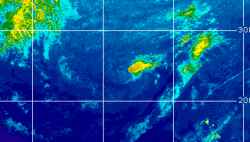
11:00 EDT Update 2 September 2009 Erika remains weak at 11, it's still moving relatively slowly toward the west, toward the northern Leeward Islands. With strong shear approaching, the hurricane center is suggesting that Erika may weaken further and even dissipate. Their track forecast is very uncertain, however. Erika will be one to watch, but it's likely to remain weak. 6:45 EDT Update 2 September 2009 Erika has relocated a bit south and more to the west overnight, still moving quite slowly at 5MPH to the west, this has brought up Tropical Storm Warnings in the prior watch areas, but nothing new yet for the Virgin Islands and Puerto Rico. Erika actually got a bit more disorganized overnight, but seems to be holding now at around 50mph. It's still trying to find a good center, and pressures still remain relatively high. It's intensity forecast is more complex than the track forecast, there is not a really solid thought on it. ![]() The forecast track is a very uncertain move to the west and northwest eventually toward east of the Bahamas. Many models have shifted west overnight, but the model spread north to south is much more varied than prior storms this season. Therefore those across the Bahamas and southeast will want to monitor it over the week. Because of the slow forward motion it could take a while. Right now I would not focus on any one model, all of them are a bit suspect right now past 2 or 3 days. Original Update Tropical storm Erika has formed out of a wave east of the Leeward islands in the Caribbean, formerly known as Invest 94L. ![]() Because of the forward motion, tropical storm watches are now up for St. Maarten, Antigua, Barbuda, St. Kitts, Nevis, and Anguilla. The forecast track takes it along the norther edge of the islands gradually turning more northward and places it east of the Bahamas by the weekend. Beyond that it is difficult to say, but it is currently most likely to stay offshore, with a possible southeastern US impact being slightly less probable. Florida likely will see no direct impact if it gains strength early. The confidence overall in that is fairly low... What could change that? If the system remains somewhat sheared, and disjointed (lower to mid level) then it could move further west, if it gains strength and organization the prevailing steering patterns will likely move it more north away from land. In short the Northeast Caribbean, Turks, Caicos, Bahamas, and the Southeast US (Including Florida) will want to keep checking in on Erika through the week. Currently, Erika still has some shear to deal with at the mid levels, which will likely keep it from strengthening quickly. The upper levels however, are doing quite well (thus the fanning appearance). ![]() Outside of this, another wave off Africa has <30% chance of becoming a tropical cyclone within the next 48 hours, and we'll watch that. The upper level feature currently east of the Bahamas is still not likely to develop. Martinique Radar Flhurricane Recording of Martinique Radar/Erika Approach {{StormCarib}} {{StormLinks|Erika|06|6|2009|2|Erika}} |
||||||||
|
|
|||||||
|
Erika is having some impressive bursts of new convection this evening, I'm wondering how long that will continue tonight. |
||||||||
|
|
|||||||
|
If previous couple of evenings are any indication...could be a while |
||||||||
|
|
|||||||
|
Mike I would 86 the comment on Florida will likely see no impact... for 1 its too far off (144hrs +) and also the ridge can build in alittle more. Probably best would be north of Hispaniola 4-5days out..... anyways.. just a thought! |
||||||||
|
|
|||||||
|
An impressive burst of convection just recently. If she can resist the upcoming shear and remain cohesive but very weak, I would say a more western track is not out of the question at all. |
||||||||
|
|
|||||||
|
Also interesting that the Floater loops only put out hourly updates starting at 1815 with the most recent at 2115 UTC. It makes for a sonewhat jerky progression of this substnatial burst of convection. |
||||||||
|
|
|||||||
|
I clarified the main post a bit. I reread it and it seemed to lean too much toward an all clear sounding for the US, which is a bit premature right now. |
||||||||
|
|
|||||||
|
Recon at last check... 25kft heading west, back to Saint Croix... they did make a last pass threw the center... before heading west. Product: Air Force Vortex Message (URNT12 KNHC) Transmitted: 2nd day of the month at 00:17Z Aircraft: Air Force Aircraft (Last 3 digits of the tail number are 305) Mission Purpose: Investigate second suspect area (flight in the North Atlantic basin) Mission Number: 1 Observation Number: 16 A. Time of Center Fix: 1st day of the month at 23:59:00Z B. Center Fix Coordinates: 17°29'N 57°10'W (17.4833N 57.1667W) B. Center Fix Location: 310 miles (499 km) to the E (85°) from Saint John's, Antigua and Barbuda. C. Minimum Height at Standard Level: 1,479m (4,852ft) at 850mb D. Estimated (by SFMR or visually) Maximum Surface Wind: 50kts (~ 57.5mph) E. Location of the Estimated Maximum Surface Wind: 8 nautical miles (9 statute miles) to the NNE/NE (33°) of center fix F. Maximum Flight Level Wind Inbound: From 112° at 47kts (From the ESE at ~ 54.1mph) G. Location of Maximum Flight Level Wind Inbound: 29 nautical miles (33 statute miles) to the NNE (18°) of center fix H. Minimum Sea Level Pressure: 1004mb (29.65 inHg) I. Maximum Flight Level Temp & Pressure Altitude Outside Eye: 17°C (63°F) at a pressure alt. of 1,523m (4,997ft) J. Maximum Flight Level Temp & Pressure Altitude Inside Eye: 23°C (73°F) at a pressure alt. of 1,524m (5,000ft) K. Dewpoint Temp (collected at same location as temp inside eye): 15°C (59°F) K. Sea Surface Temp (collected at same location as temp inside eye): Not Available L. Eye Character: Not Available M. Eye Shape: Not Available N. Fix Determined By: Penetration, Radar, Wind, Pressure and Temperature N. Fix Level: 850mb O. Navigation Fix Accuracy: 0.02 nautical miles O. Meteorological Accuracy: 1 nautical mile Remarks Section: Maximum Flight Level Wind: 48kts (~ 55.2mph) in the northwest quadrant at 21:54:00Z |
||||||||
|
|
|||||||
|
One thing I am noticing about this particular storm is the lack of consensus from the models as compared with what we saw with Ana, Bill and Danny. GFDL and its partner HWRF intensify Erika too much in 30 to 40 knot shear area north of the leewards, although that may relax, then heading into the persistent weakness created by our TUTT environment east of Florida. Tropical suite has her diving into the southern bahamas. UKMET and the Navy bring her right in between the two. However they all have High pressure (1024 mb) building at mid lattitudes in the eastern Conus out about 90 hrs out. Now the ridge in the Atlantic has a 1024 anchor but it is still further east than usual this year. Which personally I feel is one of the effects of an el nino year. This ridge is projected to build westward and close the gap -- MAYBE. Thats why they call it forecasting. Erika doesn't seem to be struggling too much right now. Just checked SSD -- amazing images for a tropical Storm! |
||||||||
|
|
|||||||
|
I've put this up for the approach of the storm: Flhurricane Recording of Martinique Radar/Erika Approach As far as the satellite presentation for a Tropical Storm: ![]() Says a lot. |
||||||||
|
|
|||||||
|
per above post.. i overlayed the same rainbow image onto google eath... the width of the storms on Erika from its expansion of the impressive covection from this evening went to about 400 miles north to south and 400 miles west to east... **surface center is still on the western side of covection... but getting closer to deep convection...*** in the posted Vortex data earlier... i noted the temp difference between to center fixes at flight level... 73 F at 5kft is pretty good... temp between inside and outside center was about 5 degress difference... in the last pass it went to about 10 F difference... at 5kft... |
||||||||
|
|
|||||||
|
I doubt the models have had time to acurately guestimate the future intensity or path of Erika. Let's give it another two model runs and then focus on the NHC track. I've learned over my years of tracking these storms that the NHC has come a long way in accuracy. |
||||||||
|
|
|||||||
|
Your preachin to the choir kg. I have long been an advocate of the NHC track and accuracy and defended it accordingly against wishcasters. I am just commenting on the disparity with the models for this storm at this early stage as compared to earlier storms this season. My Mantra in posts over the years has always been to trust the cone at least three days out. This probably should have been a PM. , but thought I should clarify my post in light of the confusion. |
||||||||
|
|
|||||||
|
Glad you did Craig, sometimes continuity is good. http://www.ssd.noaa.gov/goes/flt/t2/flash-ft.html Stationary and a lot going on in that storm. A lot depends on timing I think and so far this season there hasn't been that wide a spread on models. Very interesting scenarios. Thank you for sharing! Bobbi |
||||||||
|
|
|||||||
|
Winds up just a bit ...SUMMARY OF 1100 PM AST INFORMATION... LOCATION...17.5N 57.6W MAXIMUM SUSTAINED WINDS...60 MPH PRESENT MOVEMENT...WEST-NORTHWEST OR 300 DEGREES AT 8 MPH MINIMUM CENTRAL PRESSURE...1004 MB |
||||||||
|
|
|||||||
|
Little confused on the NHC's wording. First in the 11pm update, they say it is still meandering and would start moving at 8mph WNW at some point. Then at the end they say it IS moving at 8 mph WNW, but yet looking at the satellite with the lat and long lines turned on, it still seems like a due westward motion. |
||||||||
|
|
|||||||
|
you cant tell on sat est this time of night on a direct movement.... its probably moving WNW as reported by recon..but slowly! |
||||||||
|
|
|||||||
|
makes sense for visible sat...but would assume that IR sat would still be fairly accurate, but mostly just meant wasn't sure which side of the equation the NHC was taking at the moment. |
||||||||
|
|
|||||||
|
this clearly shows that Erika is closer to islands now... which also show this storm is not stacking vertically... shear and appears the surface ridge is not allowing the storm to stack up... recon currently in storm shows the center has moved west... new burts of convection on the NE side... recon flew threw it... but now signs of a surface feature... Erika is showing up on radar now... will a new center form? Right now my thinking is prolly not. http://flhurricane.com/imageanimator.php?69 |
||||||||
|
|
|||||||
Quote: Forecasting stalled out storms is so difficult. ...well for SFla, keep watching. take care |
||||||||
|
|
|||||||
|
Looking at the sats this morning, it is apparent the main area of convection dipped a bit south over the night hours. I wonder what effect this will have on the upcoming update from the NHC and the models. |
||||||||
|
|
|||||||
|
Erika is definitely a challenge for the models to get a grip on. Sure enough, there was a southward shift over the night hours: 000 WTNT41 KNHC 020859 TCDAT1 TROPICAL STORM ERIKA DISCUSSION NUMBER 3 NWS TPC/NATIONAL HURRICANE CENTER MIAMI FL AL062009 500 AM AST WED SEP 02 2009 AN AIR FORCE RESERVE HURRICANE HUNTER AIRCRAFT HAS BEEN SEARCHING FOR THE CENTER OF THE TROPICAL STORM OVER THE PAST FEW HOURS. THE CIRCULATION HAS BECOME QUITE DISORGANIZED...BUT IT APPEARS THAT THE CENTER HAS REFORMED TO THE SOUTHWEST OF THE PREVIOUSLY ESTIMATED TRACK. HOWEVER THE FLIGHT-LEVEL WINDS SUGGEST THAT THERE MAY BE MULTIPLE CENTERS...SO THE ADVISORY POSITION IS HIGHLY UNCERTAIN AND PROBABLY REPRESENTS A MEAN CENTER...OR THE LOCATION OF THE LOW-LEVEL VORTICITY MAXIMUM. THE INITIAL MOTION...270/4...IS OF COURSE ALSO HIGHLY UNCERTAIN. TO MAINTAIN SOME CONTINUITY FROM THE PREVIOUS FORECAST AND FOLLOWING THE TRACK GUIDANCE...A WEST- NORTHWESTWARD TRACK IS PREDICTED TO RESUME. ERIKA SHOULD BE STEERED BY THE FLOW TO THE SOUTH OF A WEAK SUBTROPICAL RIDGE FOR A COUPLE OF DAYS. LATER IN THE FORECAST PERIOD...DYNAMICAL GUIDANCE SHOWS A MORE NORTHWESTWARD MOTION FOR A STRONGER CYCLONE...E.G. THE GFDL AND HWRF...AND A CONTINUED WEST-NORTHWESTWARD MOTION FOR A WEAKER SYSTEM...E.G. THE GFS. THIS IS A LOW-CONFIDENCE TRACK FORECAST. DATA FROM THE AIRCRAFT INDICATE THAT ERIKA HAS WEAKENED A LITTLE... WHICH IS NOT SURPRISING CONSIDERING THE DISORGANIZED APPEARANCE OF THE SYSTEM ON SATELLITE IMAGES. MODERATE WESTERLY SHEAR HAS BEEN DISRUPTING THE CYCLONE BUT THE SHEAR IS NOT EXPECTED TO BE STRONG ENOUGH TO PREVENT SOME STRENGTHENING DURING THE NEXT DAY OR SO. THEREAFTER...AN UPPER-TROPOSPHERIC TROUGH FARTHER TO THE WEST IS LIKELY TO IMPART INCREASING SOUTHWESTERLY SHEAR ON ERIKA...WHICH SHOULD INDUCE WEAKENING. THE NHC INTENSITY FORECAST IS VERY SIMILAR TO THE PREVIOUS OFFICIAL FORECASTS...BUT BELOW THE CONSENSUS OF THE NUMERICAL INTENSITY GUIDANCE. IT SHOULD BE NOTED THAT SOME OF THESE NUMERICAL MODELS...SUCH AS THE HWRF AND GFDL... HAVE SHOWN A HIGH BIAS FOR A COUPLE OF THIS YEAR'S ATLANTIC TROPICAL CYCLONES. GIVEN THE SOUTHWARD SHIFT IN THE TRACK...A TROPICAL STORM WARNING HAS BEEN ISSUED FOR THE NORTHERN LEEWARD ISLANDS. |
||||||||
|
|
|||||||
|
uhh, is it me or has this storm jogged a bit to the south? id continue to watch those models, they will shift more to the west. as it is, they dont have a grasp on what this thing is doing. half are to the north half are to the south. we just have to watch it. its lost some steam, but conditions are favorable to beef itself up within the next 24 hours. |
||||||||
|
|
|||||||
|
Parts of Erika are starting to come into range of the Martinique Radar. Erika as a whole is reminding me a whole lot of Chris from 3 years ago which had center vs convection issues and had a convection/center "split off" after it got past the Leewards. |
||||||||
|
|
|||||||
|
Notice the burst of convection right at 16.5N 59W. That is just south of the Tropical Forecast point. |
||||||||
|
|
|||||||
|
Erika's organization is pretty messy this morning. There is a notable surface spin over Guadeloupe, moving southwest, but that may be the original central vortex from last night that rotated back out from under the convection. Recon got a center fix an hour ago well east of Guadeloupe. New convection is firing even farther east. What we possibly have is a mean center with little vorts rotating around it. It's interesting that Erika will now likely track over the northern Leeward islands. |
||||||||
|
|
|||||||
|
I'm looking at Martinque radar and you can see at least one center crossing the islands as we speak and it is clearly detached from the mid level circulation. Satellite imagery is also indicating their detached. I've just began to look at all of this but wanted to post a brief blip about what looks like an impressive image on satellite and once again close examination of the lower levels of the system. I requested my username to be changed from alaberrypatch to berrywr; we are one and the same. |
||||||||
|
|
|||||||
|
IR RGB gives a pretty good picture of where the LLC (at least one of them) is right now. It also gives a good 3D perspective on the lower level vs mid and upper levels. http://www.ssd.noaa.gov/goes/flt/t2/loop-rgb.html |
||||||||
|
|
|||||||
|
Is the 'relocation' toward the south actual movement or is it just the part of a center 'wobble' that moves south, then later in the rotation will spin around and it will look like the center is moving more toward the north? These weak systems do tend to wobble like a slow spinning top. Don't be tricked by a wobbly LLC into thinking it is a movement trend. |
||||||||
|
|
|||||||
|
02/14Z - Morning everybody! - Good news and bad news! Good news, sattelite and radar imagery out of Martinque confirms at least one LLC detached from convection to the east. A closer look at IR imagery just before visible imagery clearly shows the system is being adversely effected by shear to its west and today to its north. Wind Shear analysis out of SSEC confirms shear to its north is stronger today, but weaker to the west, but sufficient to impose problems currently over the system. The bad news: Erica remaining shallow is going to favor a more west forecasted course and slower moving system as upper features change with the ridge to the north and northeast of the system extending a ridge axis westward and interesting enough a cutoff low progged to be in the Midwest-South Central US with just enough of a trough extending into the GOM and an upper ridge over the western Carribbean extending southwestward towards South America. Erika is embedded in what is referred to as col; a neutral region between two (surface and/or upper) lows and highs. Very weak steering currents are the norm. The appearance of convection for the past two mornings have been very impressive on satellite and once again the common denominator is where convection exists, very low shear aloft. Aircraft vortex data revealed at 1143Z winds were 24 knots at 850 mbs, extrapolated SLP of 1008 mbs (up 4 mbs) and Max FL winds were 33 knots in the NE quadrant. The 1242Z Quikscat indicated winds near 50 knots in convection well to the east of the LLC but rain-corrupted measurements were the norm, but there were some good numbers measured. I'm not as confident as I was yesterday about the future track of Erika. Shear forecasted over the next two to three days near the US is extremely hostile, but Erika is not expected to move much over the next several days and upper features will change. I'm not going to speculate where Erika will go with the variables in play and nor is it clear whether Erika can remain a viable tropical cyclone, but we can speculate! |
||||||||
|
|
|||||||
|
TROPICAL STORM ERIKA DISCUSSION NUMBER 4 NWS TPC/NATIONAL HURRICANE CENTER MIAMI FL AL062009 1100 AM AST WED SEP 02 2009 VISIBLE SATELLITE IMAGES AND AIR FORCE RESERVE HURRICANE HUNTER DATA SHOW THAT ERIKA IS A POORLY ORGANIZED SYSTEM. THERE ARE MULTIPLE SWIRLS APPARENT ON THE SATELLITE IMAGERY ROTATING IN THE LARGER CIRCULATION ENVELOPE WITH A MEAN CENTER TO THE WEST OF THE DEEP CONVECTION. THE SFMR EARLIER REPORTED WINDS OF ABOUT 35 KT...WHICH IS IN GOOD AGREEMENT WITH SATELLITE INTENSITY ESTIMATES...SO THAT VALUE WILL BE USED AS THE INITIAL INTENSITY. .....DESPITE ALL THIS SHEAR...ALL RELIABLE GUIDANCE RESTRENGTHENS THIS SYSTEM TO NEAR HURRICANE STRENGTH IN A FEW DAYS. THIS REINTENSIFICATION DOES NOT SEEM VERY LIKELY AND THE NHC FORECAST IS MUCH LOWER THAN THE GUIDANCE. GIVEN THE POSSIBLE SHEAR DURING THE FORECAST PERIOD...IT WOULD NOT BE SURPRISING IF ERIKA DISSIPATED. ....THE OFFICIAL FORECAST HAS BEEN SHIFTED LEFT OF THE PREVIOUS ONE AND IS LEFT OF THE DYNAMICAL CONSENSUS DUE TO THE ANTICIPATION OF ERIKA REMAINING WEAK. IT SHOULD BE EMPHASIZED THAT...OVERALL...THIS IS A LOW-CONFIDENCE TRACK FORECAST. The forecast is about as erratic as Erika at this point...hard for anyone to tell. |
||||||||
|
|
|||||||
|
The 2006 Chris like scenario, where it makes it a bit further west and basically falls apart, especially if there is land interaction seems likely for Erika. Future track places it in the Bahamas, but it likely won't be much when it gets there. |
||||||||
|
|
|||||||
|
It seems weird that basically all of the intensity models would miss that drastically on this one. As the NHC said, it is basically going against all model guidance for intensity by calling for this system to dissipate! But they also said it was fairly low confidence also... Wunderground Intensity Plot |
||||||||
|
|
|||||||
|
Refer to SSEC Wind Shear Analysis, Navy Wind Shear Forecasts and NCEP Models and Forecast Branch 300mb and 200mb Analysis: SSEC Wind Shear: http://cimss.ssec.wisc.edu/tropic/real-time/atlantic/winds/wg8shr.html Navy Wind Shear Forecast: http://www.nlmoc.navy.mil/cgi-bin/wxgrid.pl?aor+ngpshrcolor+aor+ngpshr+aor+avnshr NCEP GFS 200mb at 02/12Z: http://www.nco.ncep.noaa.gov/pmb/nwprod/analysis/namer/gfs/12/images/gfs_200_000l.gif NCEP GFS 300mb at 02/12Z: http://www.nco.ncep.noaa.gov/pmb/nwprod/analysis/namer/gfs/12/images/gfs_300_000l.gif NWSFO San Juan Model Guidance Page: http://www.srh.noaa.gov/sju/?n=model01 Courtesy of NHC 15Z Discussion: VERTICAL WIND SHEAR HAS INCREASED EARLIER THAN EXPECTED...WITH CIMSS DIAGNOSING ABOUT 15-20 KT OF SHEAR. AT FIRST GLANCE...THE SHEAR DOES NOT APPEAR TO BE TOO STRONG OVER THE SYSTEM WITH SOUTH OR SOUTHEASTERLY WINDS REPORTED AT 200 MB OVER THE NORTHERN LEEWARD ISLANDS. HOWEVER...UPPER-AIR DATA FROM GUADELOUPE AND ST. MAARTEN SUGGEST THAT THE SHEAR IS PRIMARILY COMING FROM SOUTHWESTERLY WINDS BETWEEN 300 MB-250 MB...AND THIS IS APPARENTLY UNDERCUTTING THE OUTFLOW LAYERS AT 200 MB AND ABOVE. MOST OF THE GLOBAL MODELS DO NOT SHOW MUCH RELAXATION OF THIS SHEAR...AND ACTUALLY SHOW IT INCREASING SIGNIFICANTLY IN A COUPLE OF DAYS. DESPITE ALL THIS SHEAR...ALL RELIABLE GUIDANCE RESTRENGTHENS THIS SYSTEM TO NEAR HURRICANE STRENGTH IN A FEW DAYS. THIS REINTENSIFICATION DOES NOT SEEM VERY LIKELY AND THE NHC FORECAST IS MUCH LOWER THAN THE GUIDANCE. GIVEN THE POSSIBLE SHEAR DURING THE FORECAST PERIOD...IT WOULD NOT BE SURPRISING IF ERIKA DISSIPATED." |
||||||||
|
|
|||||||
|
This storm REALLY looks like it is separating (or decoupling) the convection from the centers of circulation. On visible, it looks like the convection is stationary while the LLC continues to move off to the WSW. The tops of the latest convective burst even look as if they might be blowing off to the SE. What is going on with this system? If it keeps this up, I could easily see it dissipating or at least going back to an open wave until the shear relaxes or it moves into a lower sheer environment. |
||||||||
|
|
|||||||
|
Interestingly the various models are often slow to pick up some tropical systems, and yet they can be equally slow to "let go" or weaken a system. Given the current appearance, along with the newer data suggesting a less obvious lower level ( 300mb ) shear at play, and then potentially add in a possible factor of interaction with land ( Puerto Rico perhaps ), one would have to re-think the near term health of this particular tropical system. I for one, fully anticipated continued strengthening based on looking at more simplified single level 200mb charts and Erica's projected motion. I will say this however, "if" a relativly healthy mid level is maintained, and without getting fully dragged over most of the Greater Antilles, and somehow maintains some convective identity while slowly moving more or less WNW over time, it would be extremely prudent for those in the Bahamas and Florida to remain keenly aware that given the right conditions, tropical systems can develop fairly quickly. |
||||||||
|
|
|||||||
|
Hour old visible...roughly You can visualize some of the levels of shear mentioned by NHC in Berry's post above. ![]() Large image here: http://i.flhurricane.com/images/2009/GOES15452009245u8WRNv.jpg Vis, IR and WV imagery available here: http://weather.msfc.nasa.gov/GOES/goeseasthurr.html |
||||||||
|
|
|||||||
|
Ericka just seems elongated like abroad trough of low pressure moving wnw across the upper antillies. with a small vorticy, pingponging around a much broader one. |
||||||||
|
|
|||||||
|
The latest GFDL keeps it going west, then over the islands into the southern Bahamas later, canadian moves it due west and dissipates it. |
||||||||
|
|
|||||||
|
There are more indications now that a Chris/2006 type scenario is unfolding, where the LLC is racing away from the convection, which, most likely, will keep Erika moving west and it is more likely to fall apart then to do much more. We'll see how it does overnight. |
||||||||
|
|
|||||||
|
Okay, so let's get back to Erika. We have a storm with an inconsistent center that almost all the models agree in intensifying and moving in the general direction of South Florida with possible track curving out to sea or dissipating it ... This is not a storm out in the middle of the Atlantic that the shear and subsidence is going to possibly rip apart between swimming out to sea. I see a lot of things, a lot of possibilities. And, I want a real reason not to pay attention to models that are in agreement when those same models have done a bang up job of predicting the track of the last few storms. The NHC relies heavily upon those models, usually averaging and comparing tracks and respecting them. Suddenly they throw out the CMC and the HWRF. Why? What are we missing. This isn't Chris and it isn't Debby... it's Erika and I think there are a lot of questions to answer. A missing piece here of the puzzle... |
||||||||
|
|
|||||||
|
I think this one may be a little more complex than the Chris scenario. The system appears to have multiple LLCs and the MLC seems to be creating more of them and spitting them out. How long the system can continue doing this before shear tears it apart, I'm not sure, but Recon has found quite a few 45mph winds east of the center and not in the heaviest convection. I think the system is a mess, but not ready to give up the ghost. |
||||||||
|
|
|||||||
|
No, not ready to give up the ghost either and it's a pretty strong ghost... as deep signatures. |
||||||||
|
|
|||||||
|
She does look a little better on the last frame of the loop. http://www.ssd.noaa.gov/goes/flt/t2/loop-wv.html |
||||||||
|
|
|||||||
|
Yes it does look better convection wise, the problem, can still be seen on this loop, the low level circulation is not centered under the convection. They haven't officially split yet, and they may or may not. But until there is a circulation under the upper level convergence, the system will struggle to stay together. http://www.ssd.noaa.gov/goes/flt/t2/loop-rgb.html The confusing thing to me, as I've stated before, is the Intensity models that are being ignored. I understand the Model tracks are inaccurate right now because of the disorganization of the system, but it would seem that the Intensity models would be able to take the environmental conditions surrounding the storm into account fairly well. And yet, we are to ignore them right now. |
||||||||
|
|
|||||||
|
This RGB IR loop shows the lower level circulation substnatially east of the main convection. http://www.ssd.noaa.gov/goes/flt/t2/flash-rgb.html |
||||||||
|
|
|||||||
Quote: You'd think that, but as the HHs have found out and according to the NHC there are multiple LLCs floating around. the actual vortex fix appears to be between the two LLCs. From the NHC: "THERE ARE MULTIPLE SWIRLS APPARENT ON THE SATELLITE IMAGERY ROTATING IN THE LARGER CIRCULATION ENVELOPE WITH A MEAN CENTER TO THE WEST OF THE DEEP CONVECTION." What you see racing off to the west is not the true LLC of Erika. |
||||||||
|
|
|||||||
|
If looks to threaten Florida throw everything out ....Just Kidding......Its getting battered bye shear and the models that take her west into the islands call for a weak or dissipating system over Hispanola. The models that pull her north call for a stronger system, heading for an eventual weakness in the ridge north north east of the Bahamas. For florida you want something right in between and that's a lot to ask for in my opinion. |
||||||||
|
|
|||||||
Quote: Careful now, suggesting that is definitely not throwing data out the window. Look at how many models (including the GFS) have it doing that exact thing right now: Erika Wundermap |
||||||||
|
|
|||||||
|
Multiple centers, spin off circulations, and more with Erika. The setup ahead is a forecaster's nightmare, even if the "most likely" situation is for it to weaken and possibly dissipate, it's by no means certain. The westward motion will win out, and the analogs of Chris in 2006 and Debby in 2000 are the most similar in my memory, but certainly Erika is going to be different. Again the satellite IR loop looks impressive, while the visible not so much. The westerly shear this year is keeping everything in check. I'm still thinking it will fall apart before it gets too far West. |
||||||||
|
|
|||||||
|
Maybe I've just been looking at the satellite too long but it seems like there is a new (at least new for the Upper level) circulation point forming over an existing LLC on the NW side of the storm. Near the new flare up of convection.
|
||||||||
|
|
|||||||
|
I just got done speaking with some folks on Antigua, they are having winds of 15-20 with some good swells coming in. The Airforce tracking station there is getting ready to stowe their antennas later this evening. Any forecasts out there for what they could expect? |
||||||||
|
|
|||||||
|
LLC has slowed, and the convection east of her is beginning to catch up. Additionally, there is convection starting to fire over the LLC..... |
||||||||
|
|
|||||||
|
Here is a great site dedicated to weather in the leewards. http://www.weathercarib.com/ |
||||||||
|
|
|||||||
Quote: I think what you're seeing is the LLC being pulled around by the overall cyclonic circulation. That the system is such a complex and disorganized Tropical Storm doesn't help with the intensity and track. The storms that are firing up over the LLC are interesting, but we'll need a few more hours to see if those storms can sustain and expand their coverage. If they do, at the very least it'll buy Erika some more time. |
||||||||
|
|
|||||||
|
So couple things overall. First, the intensity plots still have Erika increasing in strength out to 120 hours, and don't show any decline (that's as far out as the intensity will take it). Actually I take that back, a couple have a dip in the strength (i'm assuming this is Erika passing over some sort of land in the Caribbean) and then it begins to increase again. Second, there are more and more tracks starting to take Erika south of Puerto Rico and Hispaniola and Cuba. What affect would this have on Erika's chances of surviving? I know there is still a lot of Shear out there to consider.... but from looking at several of the shear models, it seems shear would be lightening a good bit about the time this system would be on the south side of Cuba (assuming it survives that long). Anyway, long winded question, how does everyone see these situations affecting Erika overall? |
||||||||
|
|
|||||||
|
To me it looks like the LLC will be getting better organized over the next 12 hrs... midlevel rainshield approaching the LLC which appears to be just east of the NHC plot @ 11pm... 16.2N and 62.2W and drifting NW.... A large area of low-midlevel rainshield should penetrate the LLC between 1am-4am eastern... We will have to see if the pressure falls when recon checks this out later.. not sure it will much by 2am..but maybe by 5am.. Its really up in the air on this. NHC west movement is really skepitcal to say the least... Erika hasnt moved much in the past 4 hrs..if anything a slight NNW drift of 2mph. Next 6hrs will be interesting to see if this gets its act together some and to see if the pressure drops 3-4mbs... guess time will tell! |
||||||||
|
|
|||||||
|
agree with ya scott to a degree... recon just made first pass.... does appear center stalled after passing those islands this afternoon... and its not moving much... 1008mb and flt. lv winds of 6kts on se side... whoa! i think she has help on the way... the radar image loops show the best overall setup of the storm i think... yesterday evening she hauled but to the islands.. crossed into carib. and then got stuck... lost he punch.. but now appears she may begin to move again and gain convection... the factors slowing this... are the wind shear ahead...Observation Number: 03 A. Time of Center Fix: 3rd day of the month at 6:28:50Z B. Center Fix Coordinates: 16°40'N 62°31'W (16.6667N 62.5167W) B. Center Fix Location: 20 miles (33 km) to the WSW (256°) from Salem, Montserrat. H. Minimum Sea Level Pressure: 1008mb (29.77 inHg) appears stronger winds are showing up to the north of center... recon is north of center now... bout to cross into Atlantic |
||||||||
|
|
|||||||
|
Erika is looking better this early morning than she has been in the last couple of days. I think the NHC track is a little premature in calling for her dissipaton, but we'll see soon enough. I remember the last Erika forming just to the west of Fort Myers from a Tropical Wave had just passed over the state. In addition to Erika, big vigorous Tropical Wave just emerged off of the African coastline, and NHC has a code yellow issued on this system. |
||||||||
|
|
|||||||
|
What a mess. We have a couple microwave passes that just looking at overall symmetry would put what looks to be the most dominant circulation just NE of Antigua/ Barbuda. I wish they would put this instrument on a geostationary sat. At this point moving W to WNW even moving through the islands there is not much to get ripped apart. I see Erika, even if she is downgraded continuing to spin off vortices in different directions until conditions become more favorable if they ever do. We still have two intensity camps -- remmnant low on one side -- storm to hurricane on the other -- all heading in the general direction of the Bahamas. Like I said what a mess. HIHO-HIHO |