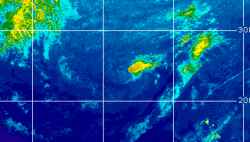
Quote: It is extremely important with Ida to pay particularly close attention to the terminology as we go forward. What makes an extratropical system different from a tropical and subtropical storm and the overall synoptic situation in relationship to the synoptic wind field and the wind fields with Ida as they interact tropically and extratropically. For the moment it is simply too complicated as to the number of variables that are and will be in play during the next few days. Personally, I can't remember the last time a tropical system underwent extratropical transition in the Gulf of Mexico and was bypassed by an incoming shortwave and frontal system. We all know what happens to old frontal boundaries in the Gulf of Mexico; but it is November; not June.
You would HOPE the models would take the time of year into consideration.....I agree with you. I don't see how this system could hop over a front as if it wasn't there. This thing is headed northeast at some point and I don't see it turning around back to the south. Something is very odd about the models right now. (could it be that there are so few precedents for this type of system in early November?)
The processes which power a "pure" tropical system are fueled by what we know is latent heat; a steam engine in simple terminology. In the military, weather forecasters are taught the difference between what are called cold core lows, warm core lows and the aggravation that exists when their warm and cold depended upon the structure at that time. A warm core low can be a thermal low which are very common in the desert SW USA due to very hot temperatures at the surface and tropical weather systems; both have the common denominator of not requiring upper level support. A dynamic low is the same as an extratropical low. It is driven by baroclinic processes; the contrast in temperatures of varying air masses. This time of year the polar front and subtropical polar jet streams move south as we progress towards winter. The difference between the polar front jet and the subtropical jet are the temperatures in the respective air masses which they reside in. Throughout the winter season it is not at all uncommon to have the two jet streams merge as one. There are other jet streams; arctic and tropical easterly but not a factor here as their names imply. As per NHC discussions there is a strong shortwave trough progressing eastward and will extend itself well into the Gulf of Mexico. This time of year the sea-state temperatures of the Gulf of Mexico are considerably cooler than the Carribbean Sea and will play a role in weakening Ida as she moves northward. The winds aloft are quite stout from west to east and they too will have a role in dampening Ida. The laws that drive these differing systems prohibit the union of a tropical hurricane and a frontal boundary. As Ida transitions to extratropical please note the course change to the east and south as Ida taps upper level support which we know is west to east and later this week as the shortwave trough and longwave pattern shifts east and the SE USA is under NW flow aloft. All of us are in for a treat; a hurricane becomes extratropical, it may merge with a frontal system and with a little luck we'll see something pretty cool; it become a stationary front draped across the state of Florida but not before this system dazzles us with why this forum exists.
-------------------- Sincerely,
Bill Berry
"To work in the service of life and the living..." - John Denver
Forum Permissions
You cannot start new topics
You cannot reply to topics
HTML is disabled
UBBCode is enabled
Rating:
Thread views: 16344
Note: This is NOT an official page. It is run by weather hobbyists and should not be used as a replacement for official sources.
CFHC's main servers are currently located at Hostdime.com in Orlando, FL.
Image Server Network thanks to Mike Potts and Amazon Web Services. If you have static file hosting space that allows dns aliasing contact us to help out! Some Maps Provided by:
Great thanks to all who donated and everyone who uses the site as well.
Site designed for 800x600+ resolution
When in doubt, take the word of the National Hurricane Center