
 Local Weather Outlooks/Discussions (12)


Ending July with the Atlantic Quieter, Pacific Roaring
Posted: 02:43 PM 26 July 2026 | | Add Comment
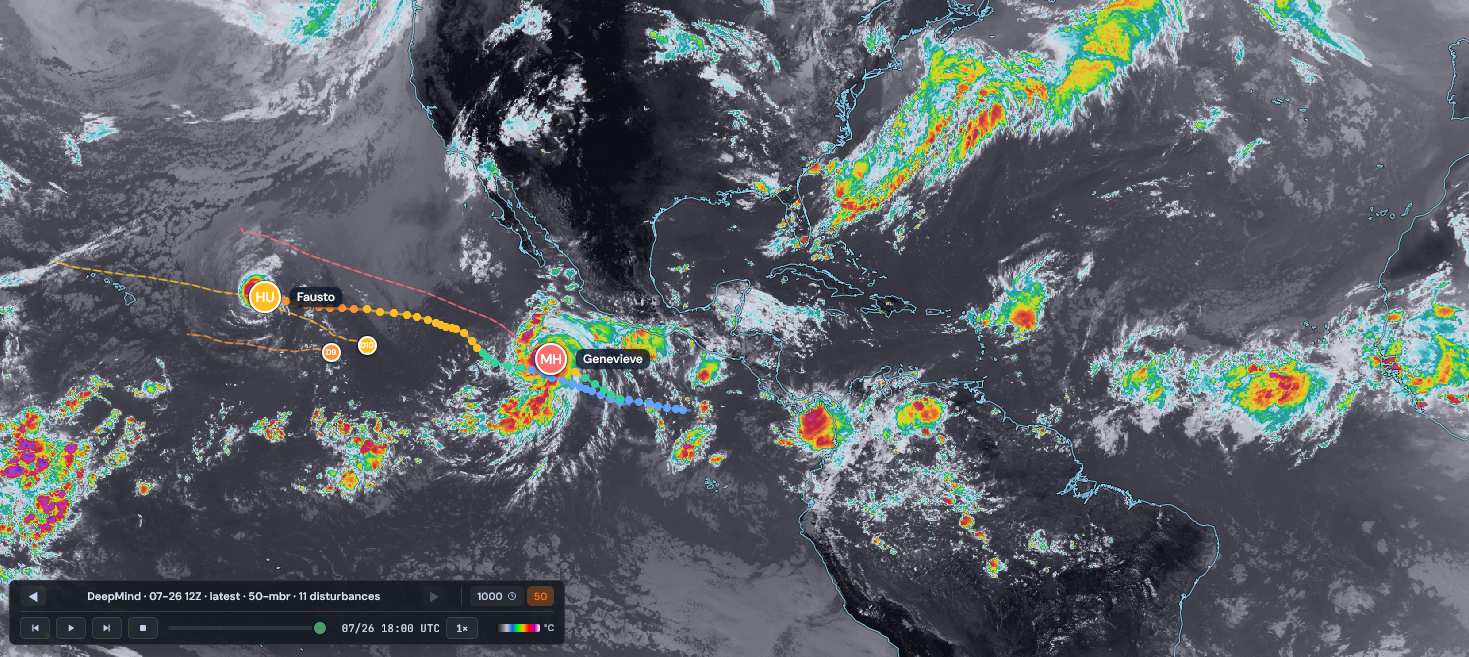
Screenshot image credit: TC-ATLAS
What is becoming quite possibly one of the strongest, if not the strongest, El Niños on record, has made it very difficult for otherwise could-be very powerful tropical cyclones in the Atlantic to level up. Both Arthur and Bertha had internal dynamics that in even just average ENSO years could easily have had them both become formidable early season hurricanes, came in much less intense versions of themselves. In the Pacific, things are completely different, and a number of US land locations on that side of the CONUS look to be at greater risk for impacts and maybe even direct hits this year.
We are currently tracking Hurricane Fausto, which is likely to at least indirectly swipe the northern Hawaiian islands and bring enhanced, potentially flooding rainfalls to some locations there. We have a Lounge up on this system and have allowed our Hype Scale to reflect the possibility of a US land impact for it, although this number could be coming down if current north-side-of-cone tracks continue. Recon is flying multiple flights into Fausto and this information is truly helping to improve the forecast.
Getting back to the Atlantic as we head into August, even strong El Niño years can occasionally see substantial rampups during that roughly August 20 to Sep 10 lead into climatological peak, so things may pick up later in August. Near-term, both the MJO and NAO phases are actually supportive for development in the Atlantic basin, but Chris Farley would like to have a word with them.
Tropical Storm Bertha in the Gulf
Posted: 01:46 PM 17 July 2026 | 4 Comments | Add Comment | Newest: 02:54 AM 23-Jul EDT
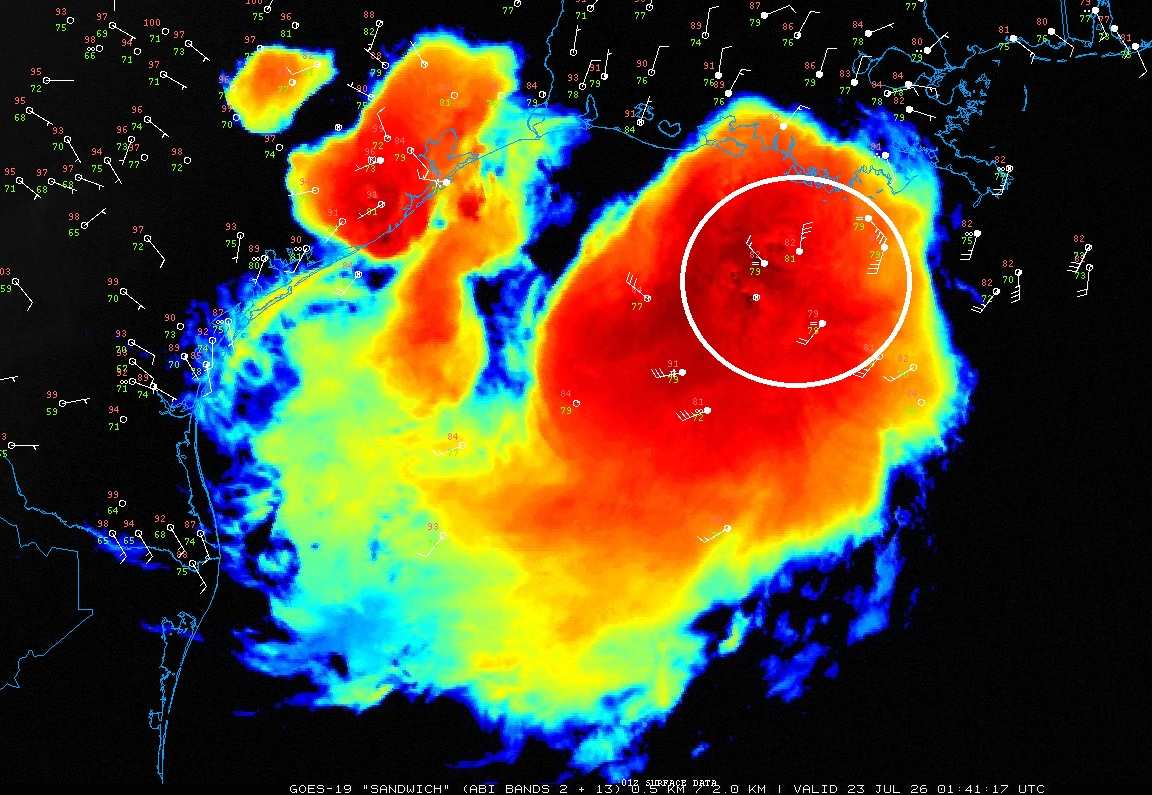
Bertha is the storm that won't quit. Tonight, a very powerful electrified convective mid-level vortex developed to the southwest of the apparent nascent surface center jump and we have confirmed sustained winds at an elevation of 98' up to 75 MPH so far. Whatever the exact technical classification for this stage of Bertha (something that is likely to get reviewed post-season), hurricane-force winds were recently occurring roughly 100 miles south of Louisiana.
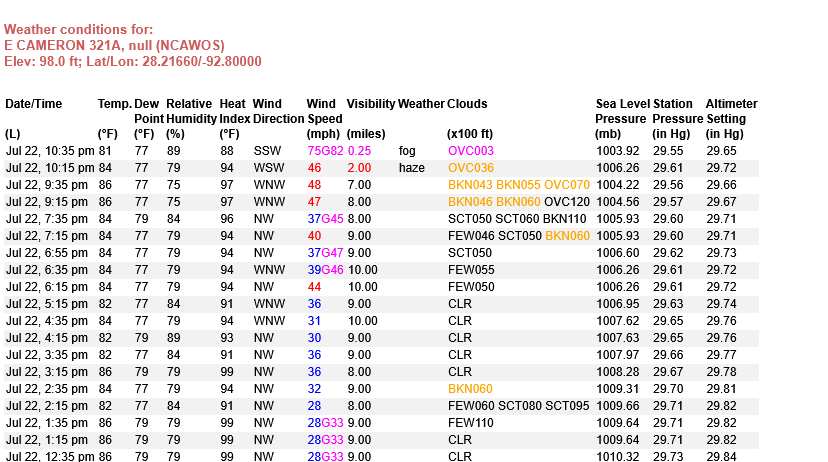
Ciel
9PM CDT 22 July, 2026 Update
Bertha's low-level circulation center may be jumping offshore under the deep convection tonight. This could dramatically influence future track and intensity.
6PM CDT 22 July, 2026 Update
I always say never, ever write off a hearty, enduring circulation. It appears Bertha's surface circulation is coming close to one way or another being back in the Gulf. Concurrently, the mid-level circulation may also be in the process of better realigning with the surface low. Finally, shear looks to be easing up and may in fact be on the lighter side in the northwest Gulf for the remainder of the cyclone's time over water.
Is the path to hurricane truly completely closed? While not the most probable outcome, if Bertha's low-level center reemerges and/or reforms over the Gulf, which is looking increasingly likely this evening, a window to ramp up to at least strong tropical storm status could open, with time left over the water now the primary variable instead of shear. Interests along the Texas coast may want to begin paying closer attention. How things play out over the next 18 hours could make or break whether this is a breezy but mostly innocuous splash and dash event, or something that impacts a lot more like a real tropical storm.
Ciel
10AM CDT 22 July, 2026 Update
Bertha decoupled overnight in the face of ever-increasing shear, and the path to hurricane is now closed. Indeed, the tropical cyclone is now mostly a ghost swirl of intense low pressure and blustery showers with a few occasional hot towers, having had the core of deep convection as well as its mid-level circulation shoved off well to the southwest. With the upcoming track over at least portions of Louisiana now certain, weakening is by far the most likely scenario. The official NHC track that carries Bertha as a Tropical Storm all into the upper Texas coast including the Houston/Galveston area may be advertising more bark than bite, but precautions are still warranted.
Ciel
1:30AM CDT 21 July, 2026 Update
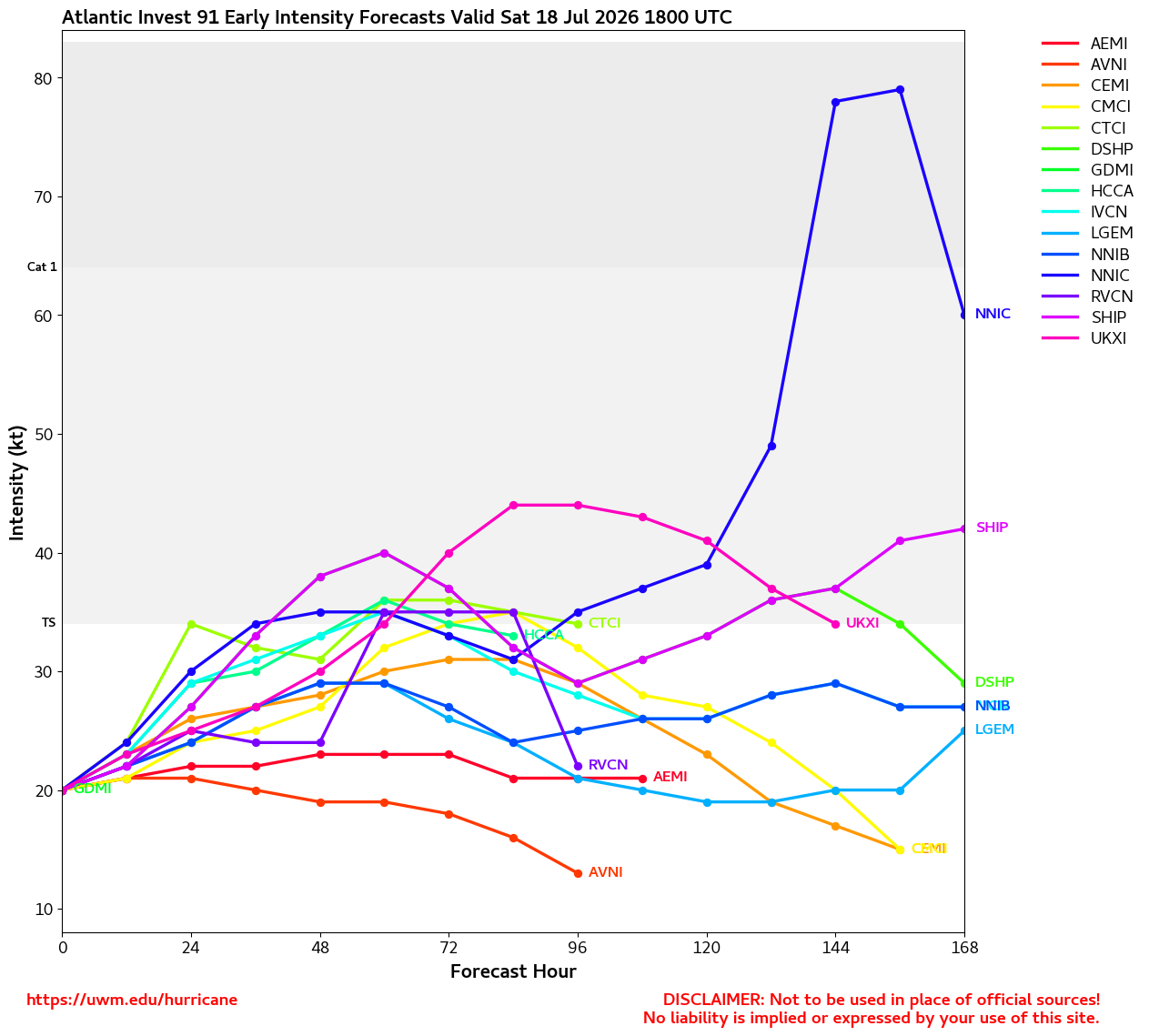
Bertha continues intensifying. A few models are back to suggesting potential for a hurricane near or just south of Louisiana and these runs are now plausible, although still not the official forecast and especially tenuous given the expected increasing shear.
Ciel
10PM CDT 20 July, 2026 Update
Now Tropical Storm Bertha continues to intensify tonight as the center has finally nestled underneath the deepest convection that is firing in the southern half of the circulation. With the center finding ways to stay even a little bit south, this keeps open the window for the cyclone to survive past Louisiana and perhaps go all the way to Texas.
In the meantime, Tropical Storm conditions are now occurring offshore and increasingly likely to occur along portions of the northern Gulf coast. With that, Tropical Storm Warnings are now being issued.
Ciel
12PM EDT 20 July, 2026 Update
Tropical Depression Two: The struggle is real. Northeasterly shear has overtaken dry air as the leading cause of the depression's inability to get named. Models have dramatically peddled back on their bullish outlooks and most now favor a low/mid-range tropical storm tracking into Louisiana or thereabouts, followed by an eventual demise over land.
There is a modest but decreasing chance that the cyclone remains more offshore and can avail itself of the very warm gulf waters, so a stronger system that makes it further west is still a possibility, but no longer the probability. More details on this can be found in the Lounge.
Ciel
11AM EDT 19 July, 2026 Update
Invest 91L has become Tropical Depression Two and NHC Advisories have begun.
Ciel
3:00AM EDT 19 July, 2026 Update
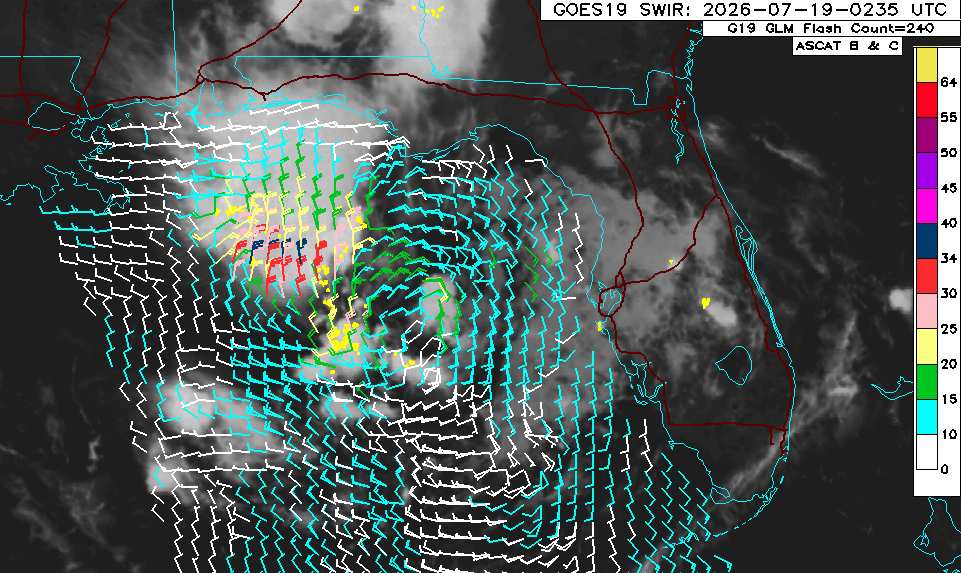
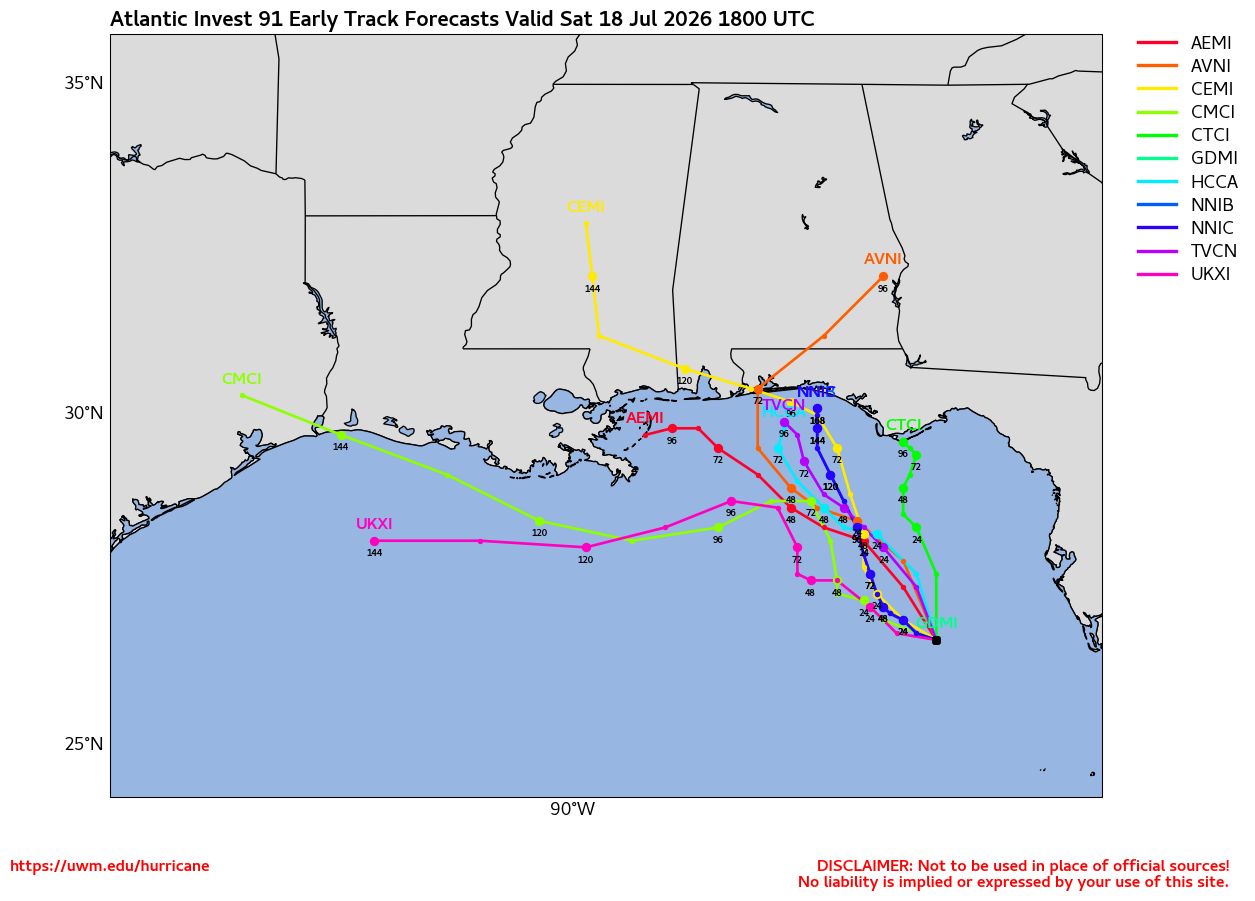
Tonight, Invest 91L now has somewhat of a surface circulation and also pressures at the surface are falling. However, the system lacks sufficient and organized deep convection as it is battling dry air and shear from an upper-level low impinging from the north. Nonetheless, it has more than a few avenues for tropical cyclone genesis to occur over the next 6-72 hours, and is more likely than not to develop. The next name on the list in 2026 is Bertha.
As far as track is concerned, earlier and stronger development could favor continued jogs ~ if not an outright persistent course ~ to the west. This could ultimately put Texas and/or northeastern Mexico on play. A somewhat delayed and/or weaker development would probably tend to favor a track heading as far east as Florida's Big Bend to as far west as the upper Texas gulf coast.
Recon will help and is scheduled to start heading in later today.
Ciel
12:45PM EDT 18 July, 2026 Update
The Area of Interest we have been tracking in the Gulf has been Invest tagged, and is now being monitored as Invest 91L. Recon has been tasked to begin flying in on Sunday. There are some indications that the environment for development may now be going up, perhaps even quite a bit overnight tonight, and so they may encounter a closed surface low when they get in there tomorrow.
Modeling has been a little vague, but with a more coherent system coming together and especially with recon scheduled to go in, should start being more reliable soon. Interests all along and in the Gulf may want to follow along with us on this one. Lots more modeling data, analysis and speculation can be found in the Lounge.
-Ciel
Original Update
We are now closely monitoring two systems that while still officially listed as having "slight" chances for development, are already producing heavy weather.
The first, and closest to home, is an area of closed low pressure aloft that is building down towards the surface, not yet Invest-tagged,
but we already have a Forecast Lounge up on this one:
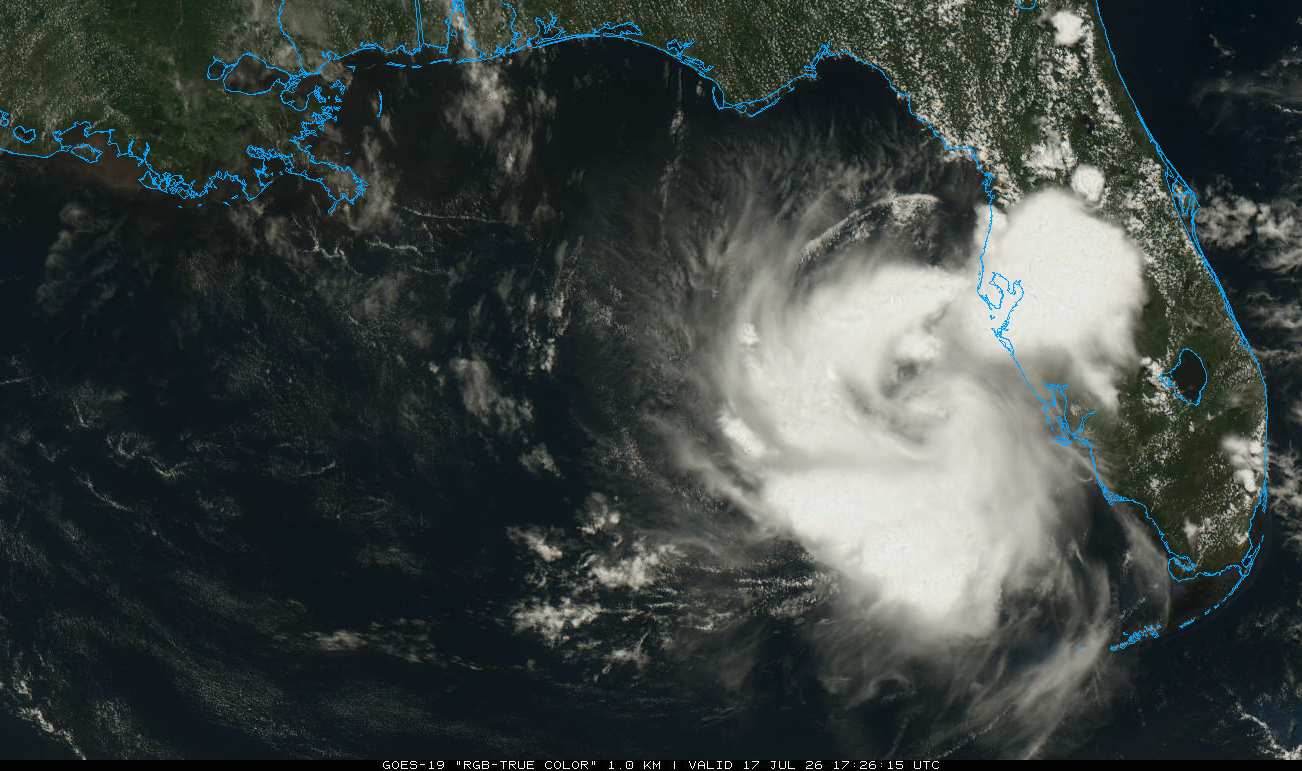
Eastern Gulf Low Forecast Lounge (INVEST 91L)
The second is a stout tropical wave now located south of the Cabo Verde Islands in the far eastern Atlantic, but encountering cooler waters and stable air.
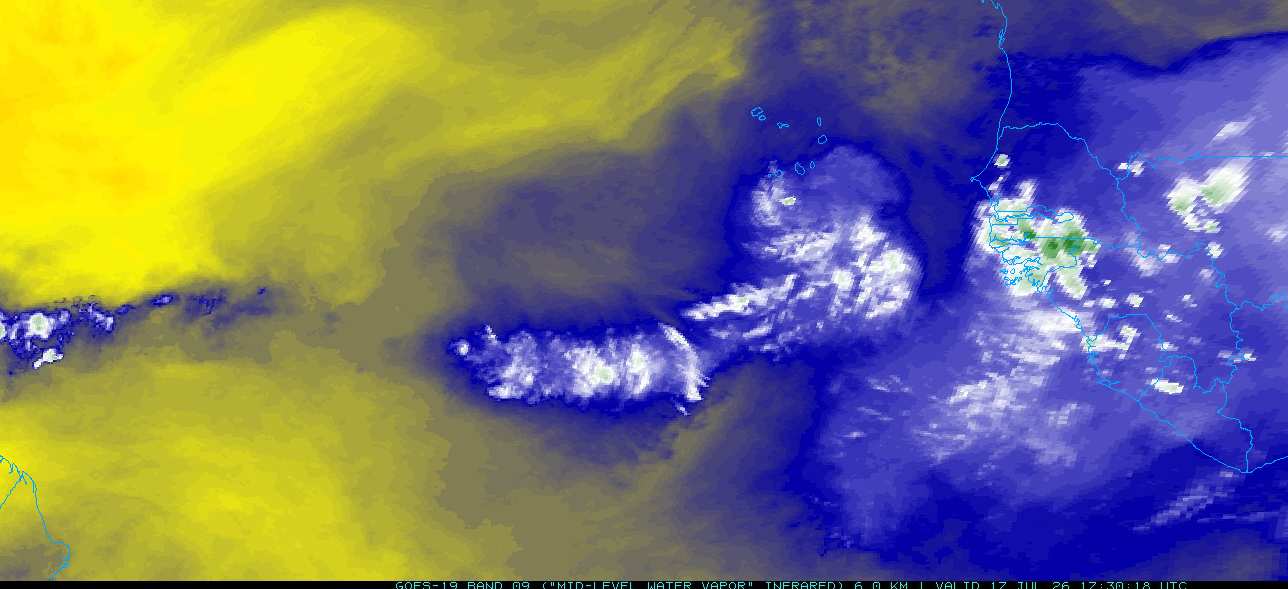
Tropical Storm Bertha Event Related Links
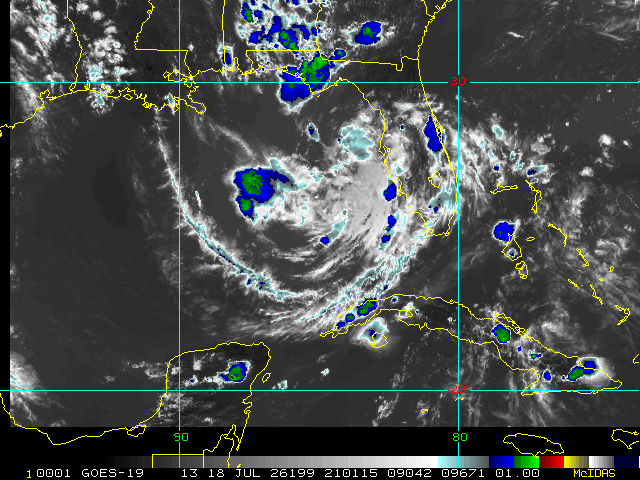
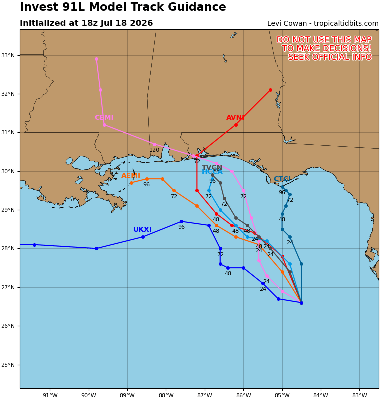
Tropical Tidbits Page on system
Flhurricane Satellite Floater Animation of Bertha
GOES Floater
Tomer Berg Info page for Bertha
CyclonicWx Page for Bertha
Clark Evans Track Model Plot of Bertha
(Animated!) Model Plots in Google Earth - In Google Maps
Clark Evans Intensity Model Plot of Bertha (Animated!)
Clark Evans Track Plot of Bertha
Clark Evans Top 10 Analog Storms for Bertha
http://www.ral.ucar.edu/guidance/realtime/current/ More model runs on from RAL/Jonathan Vigh's page
NRL Info on Bertha -- RAMMB Info
COD Atlantic Satellite View
See the forecast lounge for more speculation on this system.
Satellite Image Offshore as of 6/29/2026:
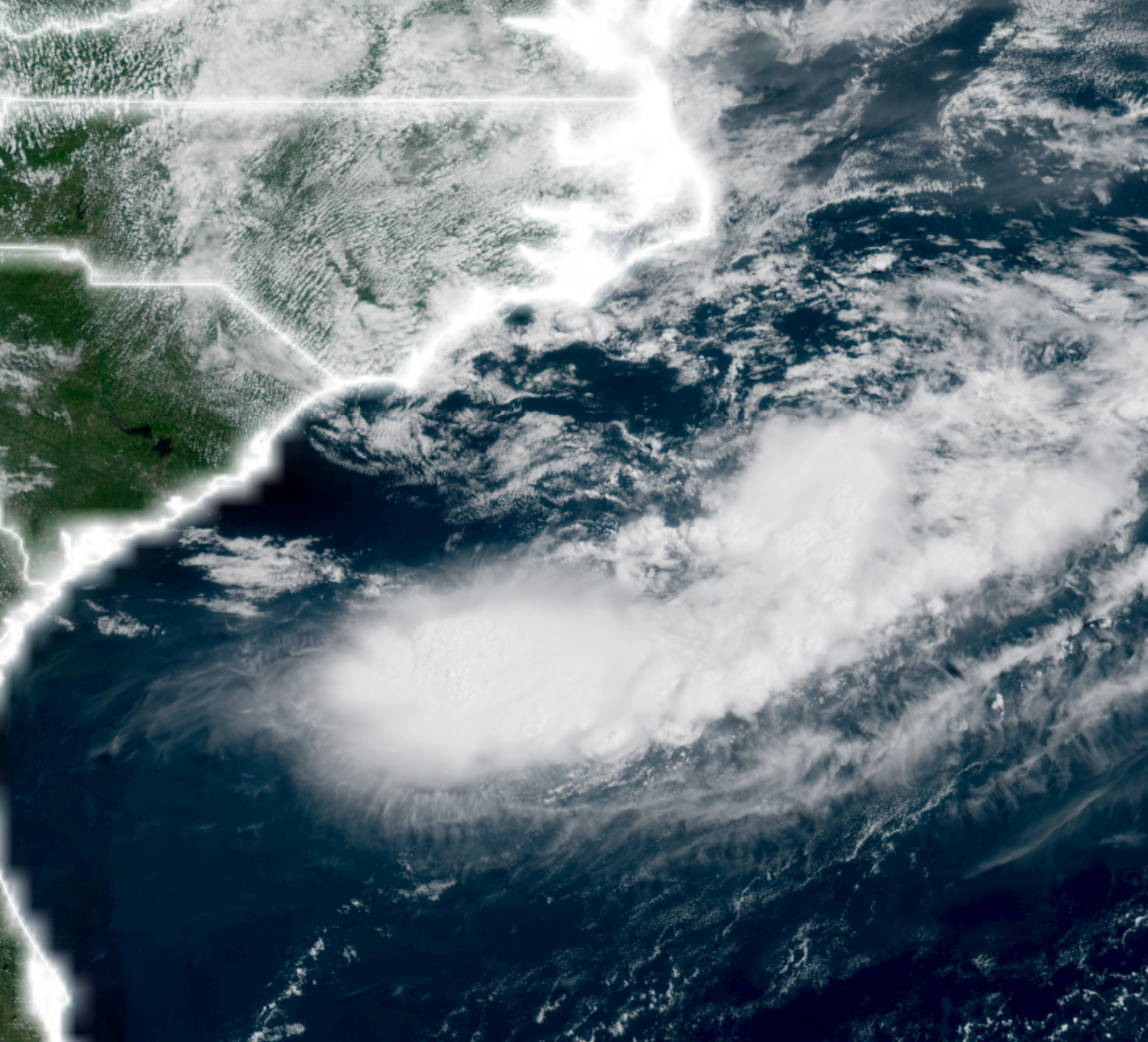
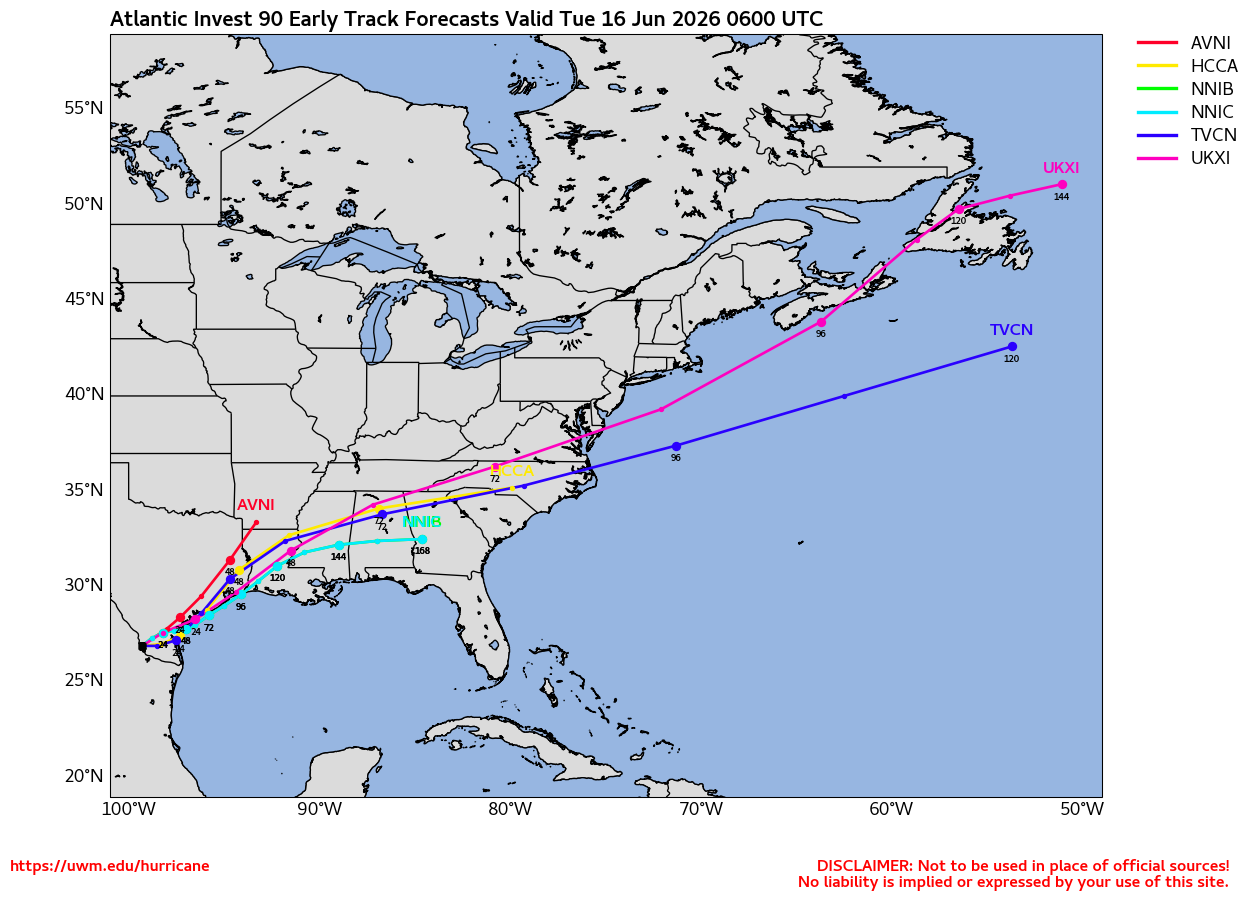
Arthur's main impact was extreme amounts of rainfall in Louisiana, Mississippi, and Alabama, and a few other places. Near and inland along the Mississippi Gulf coast in particular, the rainfall amounts were something not seen in many many years in that area, causing all sorts of freshwater flooding.
We'll be watching the tropics into July.
Tropical Storm Arthur
Posted: 10:54 AM 17 June 2026 | 4 Comments | Add Comment | Newest: 04:44 PM 17-Jun EDT
The Tropical Storm Warning has been extended along the upper Texas coastline.
Tropical Storm Arthur Special Advisory Number 6
NWS National Hurricane Center Miami FL AL012026
1130 AM CDT Wed Jun 17 2026
...TROPICAL STORM WARNING EXTENDED SOUTHWARD...
...LIFE-THREATENING FLOODING EXPECTED ACROSS PORTIONS OF THE
SOUTHEASTERN UNITED STATES...
SUMMARY OF 1130 AM CDT...1630 UTC...INFORMATION
-----------------------------------------------
LOCATION...28.8N 95.5W
ABOUT 60 MI...100 KM ENE OF PORT OCONNOR TEXAS
ABOUT 165 MI...265 KM WSW OF LAKE CHARLES LOUISIANA
MAXIMUM SUSTAINED WINDS...45 MPH...75 KM/H
PRESENT MOVEMENT...NE OR 45 DEGREES AT 9 MPH...15 KM/H
MINIMUM CENTRAL PRESSURE...999 MB...29.50 INCHES
WATCHES AND WARNINGS
--------------------
CHANGES WITH THIS ADVISORY:
The Tropical Storm Warning has been extended southward to Sargent,
Texas.
SUMMARY OF WATCHES AND WARNINGS IN EFFECT:
A Tropical Storm Warning is in effect for...
* Sargent, Texas to Morgan City, Louisiana
10AM CDT 17 June, 2026 Update
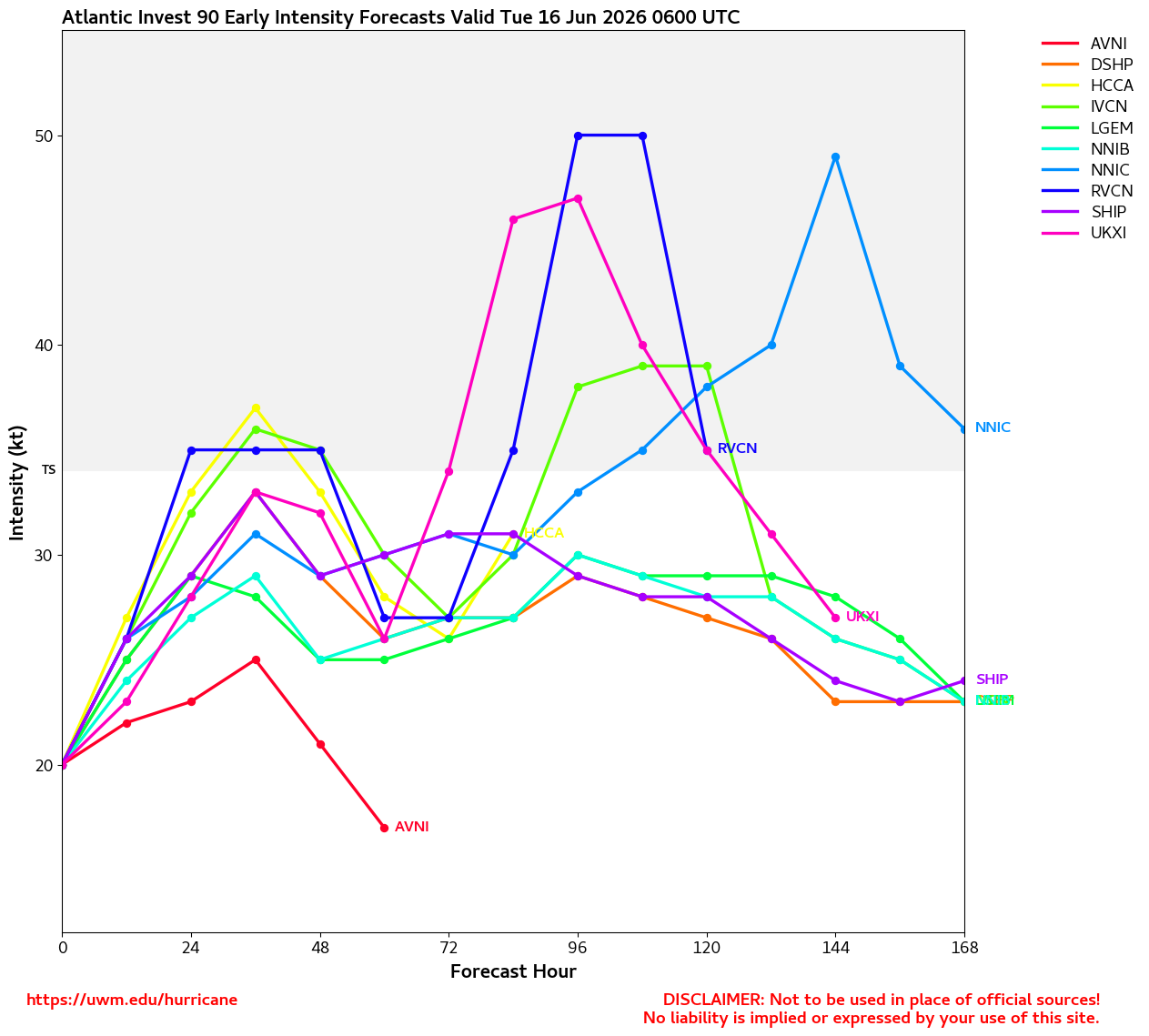
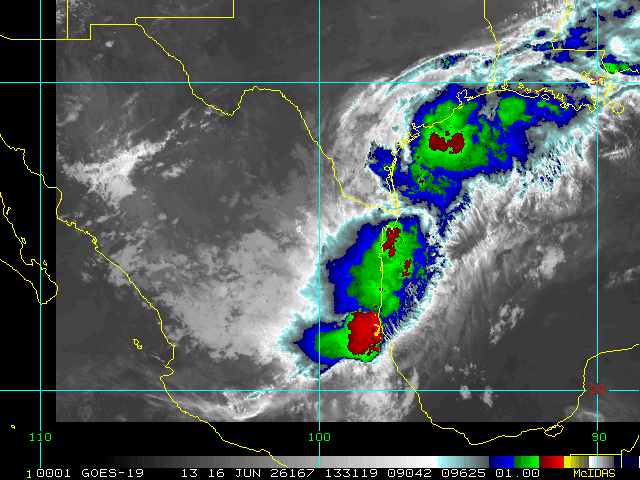
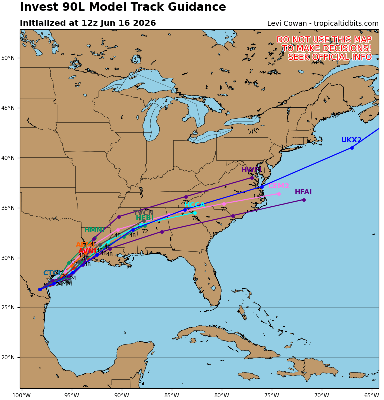
Recon has confirmed that ONE has become our first Tropical Storm of the year and NHC Advisories are being initiated on Arthur.
Model deep-dives and more in the Arthur Forecast Lounge
Tropical Storm Arthur Event Related Links
Tropical Tidbits Page on system
Flhurricane Satellite Floater Animation of 1
GOES Floater
Tomer Berg Info page for 1
CyclonicWx Page for 1
Clark Evans Track Model Plot of 1
(Animated!) Model Plots in Google Earth - In Google Maps
Clark Evans Intensity Model Plot of 1 (Animated!)
Clark Evans Top 10 Analog Storms for 1
http://www.ral.ucar.edu/guidance/realtime/current/ More model runs on from RAL/Jonathan Vigh's page
NRL Info on 1 -- RAMMB Info
COD Atlantic Satellite View
Texas Gulf Coast Links [http://moe.met.fsu.edu/~mnissenbaum/radar.html Mark Nissenbaum's radar page}
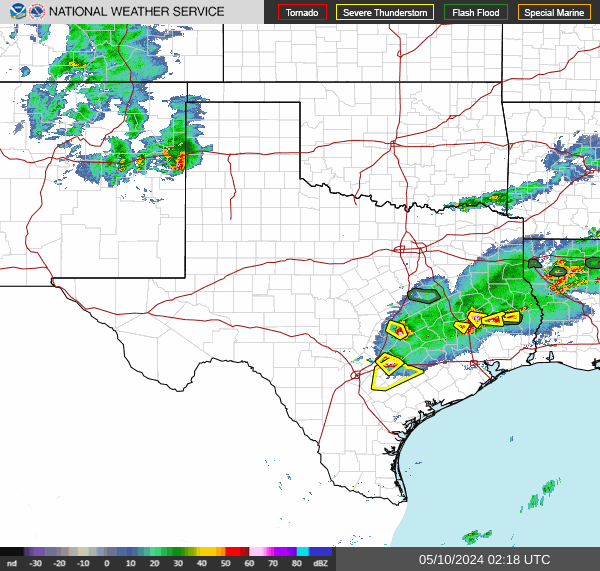
Texas Composite Radar Loop (Latest Static) East to West:
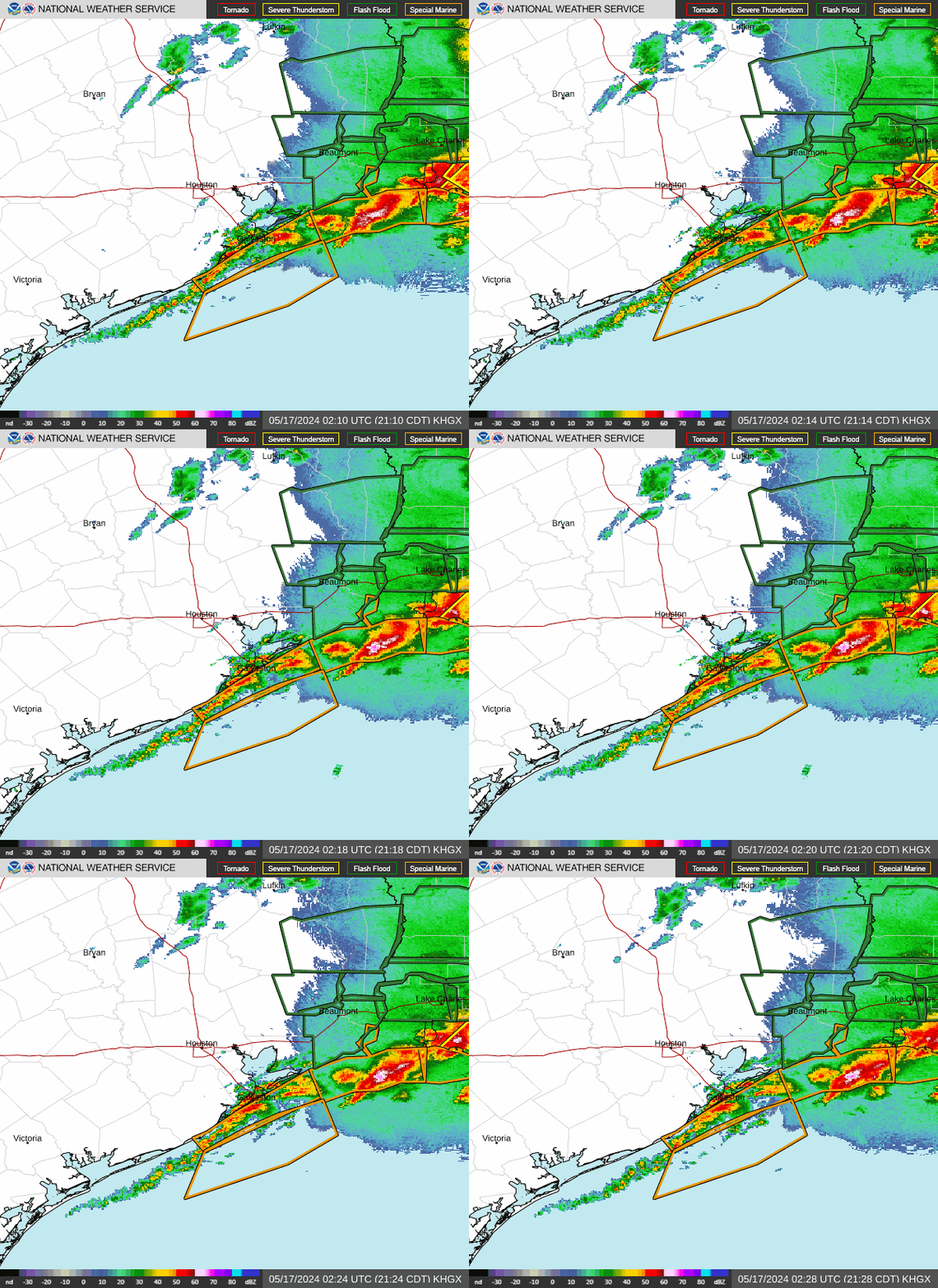
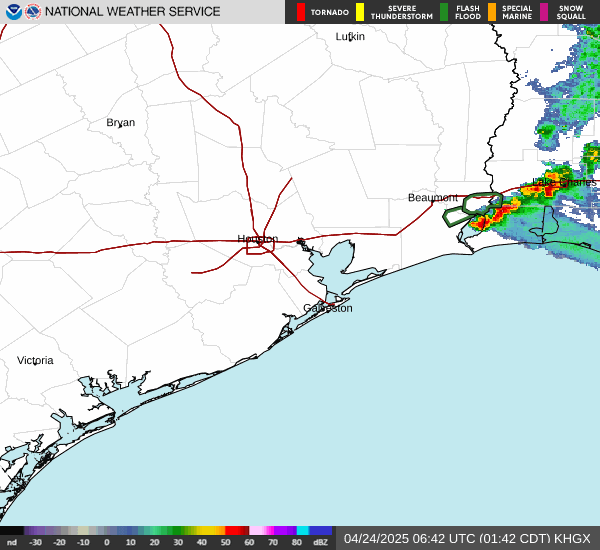
Houston/Galveston, TX Radar Radar Loop (Latest Static)
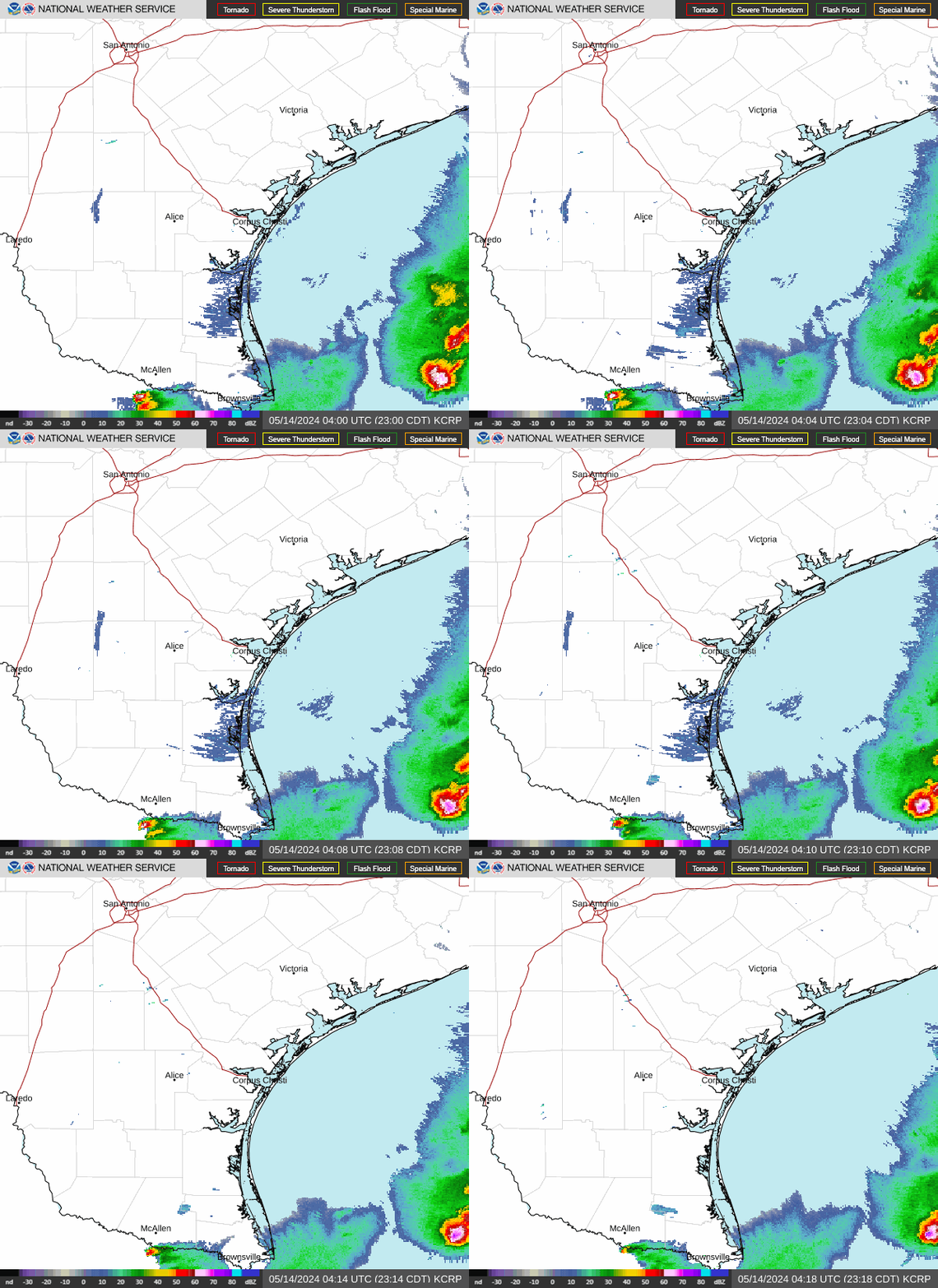
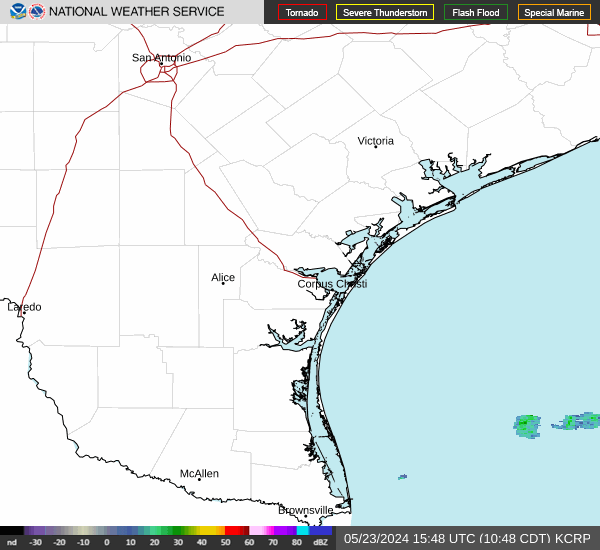
Corpus Christi, TX Radar Radar Loop (Latest Static)
Brownsville, TX Radar Radar Loop (Latest Static)
Gulf of Mexico Satellite Imagery
Area Forecast Discussions: Houston/Galveston, TX - Corpus Christi, TX - Browsnville/South Padre Island, TX